ESTE REGRESO A CLASES, ENCUENTRA MILLONES DE LIBROS CON DESCUENTO  Ver más

Enviar a
CUAUHTÉMOC, Ciudad de México
0
  • argentina
  • chile
  • colombia
  • españa
  • méxico
  • perú
  • estados unidos
  • internacional

Selecciona tu país

América

Europa

Resto del mundo

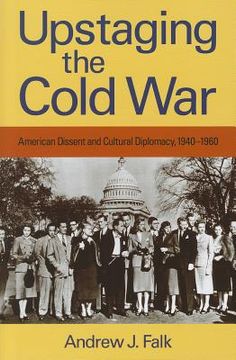
portada Upstaging the Cold War: American Dissent and Cultural Diplomacy, 1940-1960 (en Inglés)
Formato
Libro Físico
Año
2011
Idioma
Inglés
N° páginas
280
Encuadernación
Tapa Blanda
Dimensiones
22.6 x 15.0 x 1.8 cm
Peso
0.39 kg.
ISBN
1558499032
ISBN13
9781558499034

Upstaging the Cold War: American Dissent and Cultural Diplomacy, 1940-1960 (en Inglés)

Andrew J. Falk (Autor) · University of Massachusetts Press · Tapa Blanda

Upstaging the Cold War: American Dissent and Cultural Diplomacy, 1940-1960 (en Inglés) - Falk, Andrew J.

Libro Nuevo Importado
Envío: 22 a 27 días háb.
$ 1,395.58$ 837.35
-40%
Costos de importación incluídos en el precio ✅
Libro Nuevo

Quedan más de 100 unidades

$ 837.35
¡Envío Gratis!  Llega entre el 03 Sep y el 11 Sep a CUAUHTÉMOC, Ciudad de México. Seleccionar ubicación

Reseña del libro "Upstaging the Cold War: American Dissent and Cultural Diplomacy, 1940-1960 (en Inglés)"

Traditional interpretations of the 1950s have emphasized how American anti-communists deployed censorship and the blacklist to silence dissent, particularly in the realm of foreign policy. Yet those efforts at repression did not always succeed. Throughout the early years of the Cold War, a significant number of writers and performers continued to express controversial views about international relations in Hollywood films, through the new medium of television, on the Broadway stage, and from behind the scenes. By promoting superpower cooperation, decolonization, nuclear disarmament, and other taboo causes, dissident artists such as Lillian Hellman, Arthur Miller, Rod Serling, Dalton Trumbo, Reginald Rose, and Paddy Chayefsky managed both to stretch the boundaries of Cold War ideology and to undermine some of its basic assumptions. Working at times under assumed names and in some cases outside the United States, they took on the role of informal diplomats who competed with Washington in representing America to the world. Ironically, the dissidents' international appeal eventually persuaded the U.S. foreign policy establishment that their unconventional views could be an asset in the Cold War contest for "hearts and minds," and their artistic work an effective means to sell American values and culture abroad. By the end of the 1950s, the Eisenhower administration not only appropriated the work of these talented artists but enlisted some of them to serve as official voices of Cold War cultural diplomacy.

Opiniones del libro

Preguntas frecuentes sobre el libro

Todos los libros de nuestro catálogo son Originales.
El libro está escrito en Inglés.
La encuadernación de esta edición es Tapa Blanda.

Preguntas y respuestas sobre el libro

¿Tienes una pregunta sobre el libro? Inicia sesión para poder agregar tu propia pregunta.

Opiniones sobre Buscalibre

Ver más opiniones de clientes