Compartir
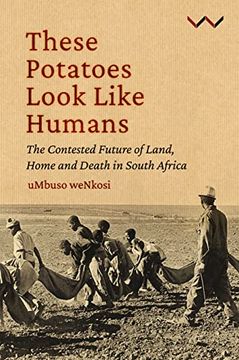
These Potatoes Look Like Humans: The Contested Future of Land, Home and Death in South Africa (en Inglés)
Mbuso Nkosi (Autor)
·
Wits University Press
· Tapa Blanda
These Potatoes Look Like Humans: The Contested Future of Land, Home and Death in South Africa (en Inglés) - Mbuso Nkosi
Libro Nuevo
Importado
Envío: 22 a 27 días háb.
$ 980.39$ 539.22
Costos de importación incluídos en el precio ✅
Reseña del libro "These Potatoes Look Like Humans: The Contested Future of Land, Home and Death in South Africa (en Inglés)"
These Potatoes Look Like Humans offers a unique understanding of the intersection between land, labour, dispossession and violence experienced by Black South Africans from the apartheid period to the present. In this ground-breaking book, uMbuso weNkosi criticises the historical framing of this debate within narrow materialist and legalistic arguments. His assertion is that, for most Black South Africans, the meaning of land cannot be separated from one's spiritual and ancestral connection to it, and this results in him seeing the dispossession of land in South Africa with a perspective not yet explored. weNkosi takes as his starting point the historic 1959 potato boycott in South Africa, which came about as a result of startling rumours that potatoes dug out of the soil from the farms in the Bethal district of Mpumalanga were in fact human heads. Journalists such as Ruth First and Henry Nxumalo went to Bethal to uncover these stories and revealed horrific accounts of abuse and routine killings of farmworkers by white Afrikaners. The workers were disenfranchised Black people who were forced to work on these farms for alleged 'crimes' against National Party state laws, such as the failure to carry passbooks. In reading this violence from the perspectives of both the Black worker and the white farmer, weNkosi deploys the device of the eye to look at his research subjects and make sense of how the past informs the present. His argument is that the violence against Black farmworkers was not only on the exploitation of cheap labour, but also an anxiety white farmers felt about their settler-colonial appropriation of land. This anxiety, Nkosi argues, is pervasive in current heated public debates on the land question and calls for 'land expropriation without compensation'. Furthermore, the dispossession of Black people from their land cannot be overcome until there is a recognition of the dead and restless spirits of the land, and a spiritual return to home for Black people's ancestors. Until such time, the cycles of violence will persist. This book will be of interest to academics and scholars working in the area of land and workers' struggles but also to the general reader who wants to gain a deeper understanding of redress and social justice on multiple levels.
- 0% (0)
- 0% (0)
- 0% (0)
- 0% (0)
- 0% (0)
Todos los libros de nuestro catálogo son Originales.
El libro está escrito en Inglés.
La encuadernación de esta edición es Tapa Blanda.
✓ Producto agregado correctamente al carro, Ir a Pagar.