¡CELEBREMOS A MÉXICO A LO GRANDE! CON LIBROS Y SUPER DESCUENTOS   Ver más

Enviar a
CUAUHTÉMOC, Ciudad de México
0
  • argentina
  • chile
  • colombia
  • españa
  • méxico
  • perú
  • estados unidos
  • internacional

Selecciona tu país

América

Europa

Resto del mundo

portada Of Armor and Men in Medieval England: The Chivalric Rhetoric of Three English Knights' Effigies (en Inglés)
Formato
Libro Físico
Editorial
Idioma
Inglés
N° páginas
202
Encuadernación
Tapa Blanda
Peso
0.37 kg.
ISBN13
9781138273757

Of Armor and Men in Medieval England: The Chivalric Rhetoric of Three English Knights' Effigies (en Inglés)

Rachel Ann Dressler (Autor) · Routledge · Tapa Blanda

Of Armor and Men in Medieval England: The Chivalric Rhetoric of Three English Knights' Effigies (en Inglés) - Dressler, Rachel Ann

Libro Nuevo Importado
Envío: 22 a 27 días háb.
$ 2,524.18$ 1,514.51
-40%
Costos de importación incluídos en el precio ✅
Libro Nuevo

Quedan más de 100 unidades

$ 1,514.51
¡Envío Gratis!  Llega entre el 09 Oct y el 19 Oct a CUAUHTÉMOC, Ciudad de México. Seleccionar ubicación

Reseña del libro "Of Armor and Men in Medieval England: The Chivalric Rhetoric of Three English Knights' Effigies (en Inglés)"

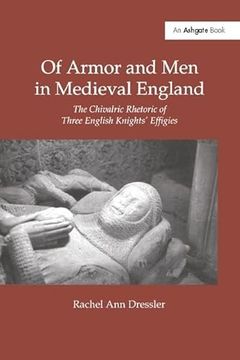
Despite the profusion of knightly effigies created between c. 1240 and c. 1330 for tombs throughout the British Isles, these commemorative figures are relatively unknown to art historians and medievalists. Until now, their rich visual impact and significance has been relatively unexplored by scholars. In this study, Rachel Dressler examines this category of sculpture, illustrating how English military figures employ a visual language of pose, costume, and attributes to construct a masculine ideal that privileges fighting prowess, elite status, and sexual virility. Like military figures on the Continent, English effigies represent knights wearing chain mail and surcoats, and bearing shields and swords; unique to the British examples, however, is the display of an aggressive sword handling pose and dynamically crossed legs. Outwardly hyper masculine, the carved figures partake in artistic subterfuge: the lives of those memorialized did not always match proffered images, testifying to the changing function of the knight in England during the thirteenth and early fourteenth centuries. This study traces the development of English military figures, and analyzes in detail three fourteenth-century examples-those commemorating Robert I De Vere in Hatfield Broad Oak (Essex), Richard Gyvernay at Limington (Somerset), and Henry Allard in Winchelsea (Sussex). Similar in appearance, these three sculptures represent persons of distinctly different social levels: De Vere belonged to the highest aristocratic rank, where Gyvernay was a lesser county knight, and Allard was from a merchant family, raising questions about his knightly standing. Ultimately, Dressler's analysis of English knight effigies demonstrates that the masculine warrior during the late Middle Ages was frequently a constructed ideal rather than a lived experience.

Opiniones del libro

Preguntas frecuentes sobre el libro

Todos los libros de nuestro catálogo son Originales.
El libro está escrito en Inglés.
La encuadernación de esta edición es Tapa Blanda.

Preguntas y respuestas sobre el libro

¿Tienes una pregunta sobre el libro? Inicia sesión para poder agregar tu propia pregunta.

Opiniones sobre Buscalibre

Ver más opiniones de clientes