ESTE REGRESO A CLASES, ENCUENTRA MILLONES DE LIBROS CON DESCUENTO  Ver más

Enviar a
CUAUHTÉMOC, Ciudad de México
0
  • argentina
  • chile
  • colombia
  • españa
  • méxico
  • perú
  • estados unidos
  • internacional

Selecciona tu país

América

Europa

Resto del mundo

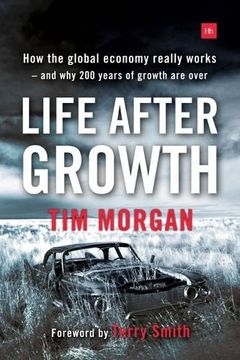
portada Life After Growth: How the Global Economy Really Works - and Why 200 Years of Growth are Over (en Inglés)
Formato
Libro Físico
Editorial
Idioma
Inglés
Encuadernación
Tapa Blanda
Dimensiones
23.4 x 15.6 x 1.0 cm
Peso
0.28 kg.
ISBN13
9780857195531
N° edición
0002

Life After Growth: How the Global Economy Really Works - and Why 200 Years of Growth are Over (en Inglés)

Tim Morgan (Autor) · Harriman House · Tapa Blanda

Life After Growth: How the Global Economy Really Works - and Why 200 Years of Growth are Over (en Inglés) - Morgan, Tim

Libro Nuevo Importado
Envío: 12 a 16 días háb.
$ 947.56$ 473.78
-50%
Costos de importación incluídos en el precio ✅
Libro Nuevo

Quedan 10 unidades

$ 473.78
Llega entre el 21 Ago y el 28 Ago a CUAUHTÉMOC, Ciudad de México. Seleccionar ubicación

Reseña del libro "Life After Growth: How the Global Economy Really Works - and Why 200 Years of Growth are Over (en Inglés)"

NEW PAPERBACK EDITION WITH ADDITIONAL INTRODUCTION AND END NOTE FROM THE AUTHOR Why, years after the banking crisis, is the global economy still mired in recession and burdened by enormous debts? Why have the tried-and-tested economic policies of the past failed us this time? In Life After Growth, leading City analyst Tim Morgan sets out a ground-breaking analysis of how the economy really works. Economists are mistaken, he argues, when they limit their interpretation of the economy to matters of money. Ultimately, the economy is an energy system, not a monetary one. From this, it follows that we need to think in terms of two economies, not one - a 'real' economy of work, energy, resources, goods and services, and a parallel, 'financial' economy of money and debt. These two economies have parted company, allowing the financial economy to pile up promises that the real economy cannot meet. Starting with the discovery of agriculture, Tim Morgan traces the rise of the economy in terms of work, energy and resources. The driving factor, he explains, has been cheap and abundant energy. As energy has become increasingly costly to obtain, the potential for prosperity has diminished, to the point where growth in the real economy has ceased. An immediate problem is that our commitments - including debt, investments and welfare promises - cannot be honoured, which means that we can expect the financial system to be wracked by value destruction. At the same time, we need to adapt to a future in which prosperity can no longer be taken for granted.

Opiniones del libro

Preguntas frecuentes sobre el libro

Todos los libros de nuestro catálogo son Originales.
El libro está escrito en Inglés.
La encuadernación de esta edición es Tapa Blanda.

Preguntas y respuestas sobre el libro

¿Tienes una pregunta sobre el libro? Inicia sesión para poder agregar tu propia pregunta.

Opiniones sobre Buscalibre

Ver más opiniones de clientes