ESTE REGRESO A CLASES, ENCUENTRA MILLONES DE LIBROS CON DESCUENTO  Ver más

Enviar a
CUAUHTÉMOC, Ciudad de México
0
  • argentina
  • chile
  • colombia
  • españa
  • méxico
  • perú
  • estados unidos
  • internacional

Selecciona tu país

América

Europa

Resto del mundo

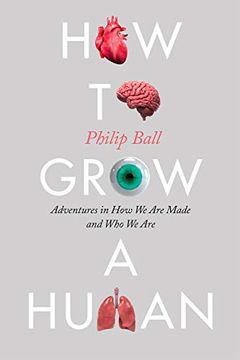
portada How to Grow a Human: Adventures in how we are Made and who we are (en Inglés)
Formato
Libro Físico
Año
2019
Idioma
Inglés
N° páginas
272
Encuadernación
Tapa Dura
Dimensiones
23.1 x 15.7 x 2.5 cm
Peso
0.66 kg.
ISBN13
9780226654805
N° edición
1

How to Grow a Human: Adventures in how we are Made and who we are (en Inglés)

Philip Ball (Autor) · University of Chicago Press · Tapa Dura

How to Grow a Human: Adventures in how we are Made and who we are (en Inglés) - Ball, Philip

Libro Nuevo Importado
Envío: 17 a 23 días háb.
$ 1,449.35$ 797.14
-45%
Costos de importación incluídos en el precio ✅
Libro Nuevo

Quedan 15 unidades

$ 797.14
¡Envío Gratis!  Llega entre el 27 Ago y el 07 Sep a CUAUHTÉMOC, Ciudad de México. Seleccionar ubicación

Reseña del libro "How to Grow a Human: Adventures in how we are Made and who we are (en Inglés)"

Two summers ago, scientists removed a tiny piece of flesh from Philip Ball's arm and turned it into a rudimentary "mini-brain." The skin cells, removed from his body, did not die but were instead transformed into nerve cells that independently arranged themselves into a dense network and communicated with each other, exchanging the raw signals of thought. This was life--but whose? In his most mind-bending book yet, Ball makes that disconcerting question the focus of a tour through what scientists can now do in cell biology and tissue culture. He shows how these technologies could lead to tailor-made replacement organs for when ours fail, to new medical advances for repairing damage and assisting conception, and to new ways of "growing a human." For example, it might prove possible to turn skin cells not into neurons but into eggs and sperm, or even to turn oneself into the constituent cells of embryos. Such methods would also create new options for gene editing, with all the attendant moral dilemmas. Ball argues that such advances can therefore never be about "just the science," because they come already surrounded by a host of social narratives, preconceptions, and prejudices. But beyond even that, these developments raise questions about identity and self, birth and death, and force us to ask how mutable the human body really is--and what forms it might take in years to come.

Opiniones del libro

Preguntas frecuentes sobre el libro

Todos los libros de nuestro catálogo son Originales.
El libro está escrito en Inglés.
La encuadernación de esta edición es Tapa Dura.

Preguntas y respuestas sobre el libro

¿Tienes una pregunta sobre el libro? Inicia sesión para poder agregar tu propia pregunta.

Opiniones sobre Buscalibre

Ver más opiniones de clientes