ESTE REGRESO A CLASES, ENCUENTRA MILLONES DE LIBROS CON DESCUENTO  Ver más

Enviar a
CUAUHTÉMOC, Ciudad de México
0
  • argentina
  • chile
  • colombia
  • españa
  • méxico
  • perú
  • estados unidos
  • internacional

Selecciona tu país

América

Europa

Resto del mundo

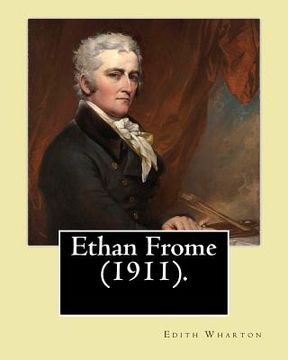
portada Ethan Frome (1911). By: Edith Wharton: Ethan Frome is a novel published in 1911 by the Pulitzer Prize-winning American author Edith Wharton. (en Inglés)
Formato
Libro Físico
Editorial
Idioma
Inglés
N° páginas
64
Encuadernación
Tapa Blanda
Dimensiones
25.4 x 20.3 x 0.3 cm
Peso
0.15 kg.
ISBN13
9781542481243

Ethan Frome (1911). By: Edith Wharton: Ethan Frome is a novel published in 1911 by the Pulitzer Prize-winning American author Edith Wharton. (en Inglés)

Edith Wharton (Autor) · Createspace · Tapa Blanda

Ethan Frome (1911). By: Edith Wharton: Ethan Frome is a novel published in 1911 by the Pulitzer Prize-winning American author Edith Wharton. (en Inglés) - Wharton, Edith

Libro Nuevo Importado
Envío: 17 a 22 días háb.
$ 668.58$ 367.72
-45%
Costos de importación incluídos en el precio ✅
Libro Nuevo

Quedan 100 unidades

$ 367.72
Llega entre el 31 Ago y el 08 Sep a CUAUHTÉMOC, Ciudad de México. Seleccionar ubicación

Reseña del libro "Ethan Frome (1911). By: Edith Wharton: Ethan Frome is a novel published in 1911 by the Pulitzer Prize-winning American author Edith Wharton. (en Inglés)"

Ethan Frome is a novel published in 1911 by the Pulitzer Prize-winning American author Edith Wharton. It is set in the fictitious town of Starkfield, Massachusetts. The novel was adapted into a film, Ethan Frome, in 1993.Ethan Frome is set in the fictional New England town of Starkfield, where a visiting engineer tells the story of his encounter with Ethan Frome, a man with a history of thwarted dreams and desires. The accumulated longing of Frome ends in an ironic turn of events. His initial impressions are based on his observations of Frome going about his mundane tasks in Starkfield, and something about him catches the eye and curiosity of the visitor, but no one in the town seems interested in revealing many details about the man or his history - or perhaps they are not able to. The narrator ultimately finds himself in the position of staying overnight at Frome's house in order to escape a winter storm, and from there he observes Frome and his private circumstances, which he shares and which triggers other people in town to be more forthcoming with their own knowledge and impressions.[2] The novel is framed by the literary device of an extended flashback. The prologue, which is neither named as such nor numbered, opens with an unnamed male narrator spending a winter in Starkfield while in the area on business. He spots a limping, quiet man around the village, who is somehow compelling in his demeanor and carriage. This is Ethan Frome, who is a local fixture of the community, having been a lifelong resident. Frome is described as "the most striking figure in Starkfield", "the ruin of a man" with a "careless powerful look...in spite of a lameness checking each step like the jerk of a chain". Curious, the narrator sets out to learn about him. He learns that Frome's limp arose from having been injured in a "smash-up" twenty-four years before, but further details are not forthcoming, and the narrator fails to learn much more from Frome's fellow townspeople other than that Ethan's attempt at higher education decades before was thwarted by the sudden illness of his father following an injury, forcing his return to the farm to assist his parents, never to leave again. Because people seem not to wish to speak other than in vague and general terms about Frome's past, the narrator's curiosity grows, but he learns little more. Chance circumstances arise that allow the narrator to hire Frome as his driver for a week. A severe snowstorm during one of their journeys forces Frome to allow the narrator to shelter at his home one night. Just as the two are entering Frome's house, the prologue ends. We then embark on the "first" chapter (Chapter I), which takes place twenty-four years prior. The narration switches from the first-person narrator of the prologue to a limited third-person narrator.................. Edith Wharton ( born Edith Newbold Jones; January 24, 1862 - August 11, 1937) was a Pulitzer Prize-winning American novelist, short story writer, and designer. She was nominated for the Nobel Prize in Literature in 1927, 1928 and 1930.Wharton combined her insider's view of America's privileged classes with a brilliant, natural wit to write humorous, incisive novels and short stories of social and psychological insight. She was well acquainted with many of her era's other literary and public figures, including Theodore Roosevelt. Edith Wharton was born Edith Newbold Jones to George Frederic Jones and Lucretia Stevens Rhinelander at their brownstone at 14 West Twenty-third Street in New York City. She had two much older brothers, Frederic Rhinelander, who was sixteen, and Henry Edward, who was eleven. She was baptized April 20, 1862, Easter Sunday, at Grace Church. To her friends and family she was known as "Pussy Jones". The saying "keeping up with the Joneses" is said to refer to her father's family..................
Edith Wharton
  (Autor)
Ver Página del Autor
Edith Wharton (Nueva York, 24 de enero de 1862 – Saint-Brice-sous-Forêt, 11 de agosto de 1937) fue una novelista, ensayista y diseñadora estadounidense reconocida internacionalmente por su estilo refinado y su mirada crítica hacia las normas sociales de su tiempo. Procedente de una de las familias más acomodadas de Nueva York y formada en un entorno cosmopolita que incluyó largas estancias en Europa, desarrolló desde joven un interés especial por la literatura, la arquitectura y el arte, lo que nutrió profundamente su obra.
A finales del siglo XIX debutó en el ámbito literario con relatos y con la publicación de The Decoration of Houses (1897), un influyente ensayo sobre diseño de interiores escrito junto a Ogden Codman Jr. Su reconocimiento como novelista llegó con títulos como La casa de la alegría (1905) y Ethan Frome (1911), en los que retrató con gran sensibilidad las ambiciones, restricciones y contradicciones de la alta sociedad estadounidense.
El éxito definitivo de su carrera se consolidó en 1920 con La edad de la inocencia, novela que le valió el Premio Pulitzer en 1921, convirtiéndose en la primera mujer en recibir este galardón. A lo largo de su vida publicó más de 40 libros, entre novelas, ensayos y relatos, caracterizados por su ironía, elegancia estilística y penetrante visión social.
Instalada en Francia tras su separación de Edward Wharton, combinó la creación literaria con un compromiso activo en obras humanitarias durante la Primera Guerra Mundial. Sus últimos años los dedicó a seguir escribiendo y a cultivar su pasión por los jardines y el diseño arquitectónico en residencias como “The Mount”.
Su obra, traducida a numerosos idiomas y aún vigente, ha sido estudiada por su aporte al realismo literario moderno y por su capacidad para iluminar las tensiones entre el deseo individual y las convenciones sociales, manteniéndola como una de las autoras más influyentes de la literatura universal.
Ver más
Ver menos

Opiniones del libro

Preguntas frecuentes sobre el libro

Todos los libros de nuestro catálogo son Originales.
El libro está escrito en Inglés.
La encuadernación de esta edición es Tapa Blanda.

Preguntas y respuestas sobre el libro

¿Tienes una pregunta sobre el libro? Inicia sesión para poder agregar tu propia pregunta.

Opiniones sobre Buscalibre

Ver más opiniones de clientes