¡CELEBREMOS A MÉXICO A LO GRANDE! CON LIBROS Y SUPER DESCUENTOS   Ver más

Enviar a
CUAUHTÉMOC, Ciudad de México
0
  • argentina
  • chile
  • colombia
  • españa
  • méxico
  • perú
  • estados unidos
  • internacional

Selecciona tu país

América

Europa

Resto del mundo

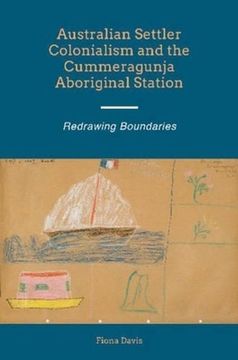
portada Australian Settler Colonialism and the Cummeragunja Aboriginal Station: Redrawing Boundaries (en Inglés)
Formato
Libro Físico
Idioma
Inglés
N° páginas
224
Encuadernación
Tapa Blanda
Dimensiones
22.8x15.4x1.4 cm
Peso
0.35 kg.
ISBN13
9781845196905

Australian Settler Colonialism and the Cummeragunja Aboriginal Station: Redrawing Boundaries (en Inglés)

Fiona Davis (Autor) · Liverpool University Press · Tapa Blanda

Australian Settler Colonialism and the Cummeragunja Aboriginal Station: Redrawing Boundaries (en Inglés) - Davis, Fiona

Libro Nuevo Importado
Envío: 22 a 27 días háb.
$ 2,033.54$ 1,220.13
-40%
Costos de importación incluídos en el precio ✅
Libro Nuevo

Quedan 54 unidades

$ 1,220.13
¡Envío Gratis!  Llega entre el 15 Oct y el 23 Oct a CUAUHTÉMOC, Ciudad de México. Seleccionar ubicación

Reseña del libro "Australian Settler Colonialism and the Cummeragunja Aboriginal Station: Redrawing Boundaries (en Inglés)"

In 1938, the anthropologist Norman Tindale gave a classroom of young Aboriginal children a set of crayons and asked them to draw. The children, residents of the government-run Aboriginal station Cummeragunja, mostly drew pictures of aspects of white civilization boats, houses and flowers. What now to make of their artwork? Were the children encouraged or pressured to draw non-Aboriginal scenes, or did they draw freely, appropriating the white culture they now lived within? Did their Aboriginality change the meaning of their art, as they sketched out this ubiquitous colonial imagery? Australian Settler Colonialism and the Cummeragunja Aboriginal Station traces Cummeragunja's history from its establishment in the 1880s to its mass walk-off in 1939 and finally, to the 1960s, when its residents regained greater control over the land. Taking in oral history traditions, the author reveals the competing interests of settler governments, scientific and religious organizations, and nearby settler communities. The nature of these interests has broad and important implications for understanding settler colonial history. This history shows white people set boundaries on Aboriginal behaviour and movement, through direct legislation and the provision of opportunities and acceptance. But Aboriginal people had agency within and, at times, beyond these limits. Aboriginal people appropriated aspects of white culture including the houses, the flowers and the boats that their children drew for Tindale - reshaping them into new tools for Aboriginal society, tools with which to build lives and futures in a changed environment.

Opiniones del libro

Preguntas frecuentes sobre el libro

Todos los libros de nuestro catálogo son Originales.
El libro está escrito en Inglés.
La encuadernación de esta edición es Tapa Blanda.

Preguntas y respuestas sobre el libro

¿Tienes una pregunta sobre el libro? Inicia sesión para poder agregar tu propia pregunta.

Opiniones sobre Buscalibre

Ver más opiniones de clientes